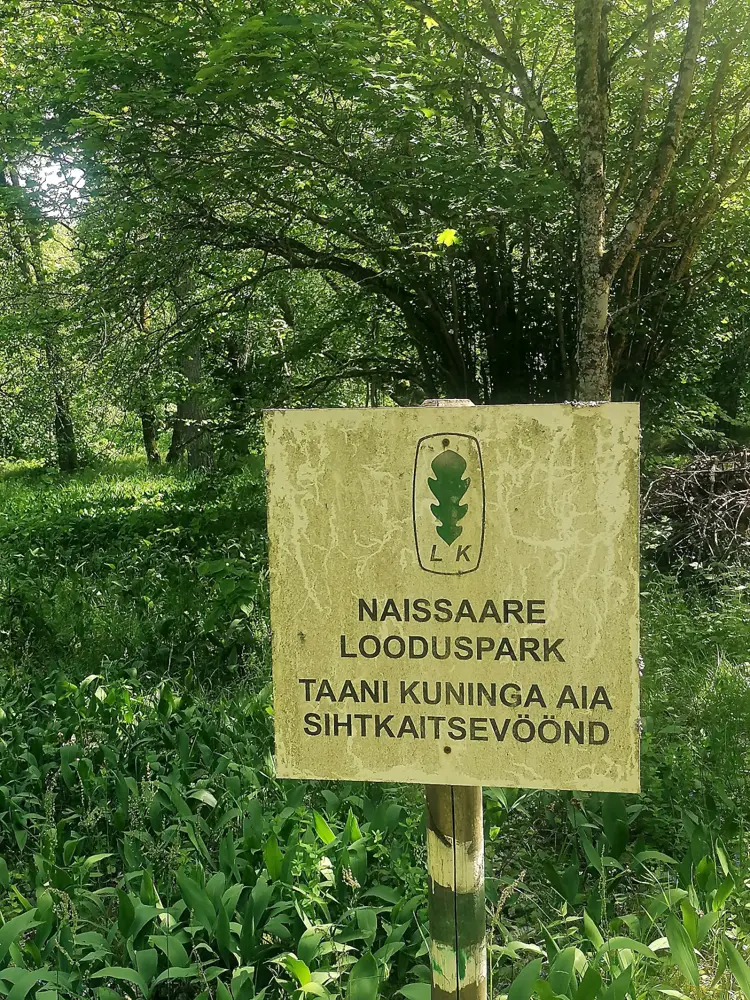
Naissaar Nature Park – good to know before your visit
What to know before visiting Naissaar: nature park rules, hiking trails, camping and campfires, litter, dogs, residents' privacy, military heritage and safety.
Naissaar is a special place with its forests, beaches, history and the community that lives here. To keep the island's nature and character intact for future generations, it is worth getting to know a few important rules and good practices before your visit.
Naissaar is much more than a beautiful destination across the sea. Here, diverse nature, a fascinating history, old villages, seaside forests and the island's own rhythm of life all come together.
People come to Naissaar for a day trip, to hike, to cycle, to spend time by the sea or to learn about the island's history and military heritage. Some arrive on their own boat, some on the passenger ship, and some stay on the island for longer.
However you arrive and however long you stay, you are a guest in Naissaar Nature Park. Specific requirements and good practices apply here to protect nature and cultural heritage, and every visitor should know them.
We have put together the most important things to help you prepare for your visit and take care of the island.
The whole of Naissaar is a nature park
All of the island's land area belongs to Naissaar Nature Park. The purpose of the nature park is to preserve the island's natural and semi-natural habitats, protected species, landscape and historical and cultural sites.
Naissaar's natural values are diverse. Here you will find:
- old natural forests and pine stands;
- seaside coastal forests;
- sandy beaches, stony shores and beach ridges;
- sand dunes and damp areas between the dunes;
- wooded meadows and paludified forest areas;
- habitats of protected plants, fungi, birds and animals.
The Naissaar protection rules name, for example, the white-tailed eagle, the boreal owl, the white-backed woodpecker and the northern bat, as well as the protected fungus species Sarcosoma globosum and Macrolepiota nympharum.
The aim of the nature park is not to close the island to people. Visitors are welcome, but their activities must not damage the protected natural values.
Naissaar Nature Park is divided into six strict protection zones and nine limited management zones. Partly different nature protection restrictions apply in different zones.
Stay on roads and marked hiking trails
Naissaar offers many opportunities to get out into nature. You can get around the island on foot, by bike or on a guided tour.
To protect nature, it is important to stay on existing roads and trails.
According to the Naissaar Nature Park protection rules:
- motor vehicles may be driven on roads;
- cycling off roads and trails is not allowed;
This means you should not cycle over dunes, through lichen-covered forest floor or outside existing trails.
Naissaar's sand dunes, lichens and forest soil are sensitive. Moving off the trails can damage vegetation and cause soil erosion.
The island has several marked hiking trails. For example:
- Naissaar Central Trail – a trail of about 11 km introducing the island's nature and history.
- Naissaar Northern Trail – a chance to get to know the nature and historical sites of the northern part of the island.
Follow the markings and signposts on the trails. Do not create new paths or ride where you are not permitted to.
If you don't know the island's roads and trails, a guided nature hike or tour is a great option.
Camping and campfires on Naissaar
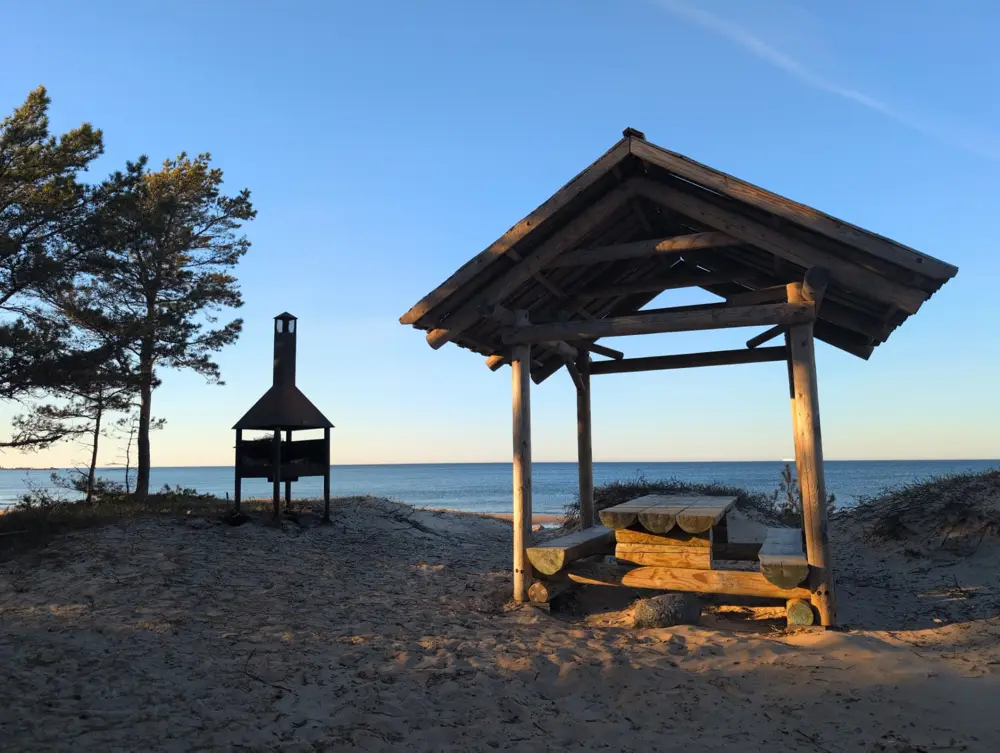
Naissaar's coastal forests and seaside recreation areas are a wonderful opportunity to enjoy nature for longer.
When camping and making a fire, however, you need to be especially careful.
On Naissaar, camping and making campfires are allowed on yard land and in places prepared and marked for this purpose with the consent of the protected area's manager. On yard land, the landowner's rights and fire safety requirements must be respected.
Official RMK recreation and campfire sites on Naissaar
RMK recreation areas have been set up on the island for visitors.
The Naissaar camping area is right next to the harbour, among pine forest with sandy ground. The camping area has:
- five covered fireplaces;
- a table and benches at each fireplace;
- four dry toilets;
- information boards and litter bins;
- a sandy beach nearby.
Camping is allowed within the camping area, close to the fireplaces.
The Hülkari campfire site is at the south-eastern tip of the island. It has:
- a sheltered seating area with tables and benches;
- a covered fireplace;
- a dry toilet;
- a litter bin and an information board;
- a place to camp.
The Hülkari campfire site offers a beautiful view of Tallinn Bay and the Tallinn skyline.
Before camping, check the RMK website for the latest terms of use of the recreation areas.
Fire safety is especially important on Naissaar.
The island's pine forests, dried mosses and other undergrowth can catch fire easily in dry weather. A carelessly extinguished campfire or a discarded cigarette butt can cause a forest fire.
Please:
- Only make a fire in designated places.
- Use the existing fireplace.
- Never leave a fire unattended.
- Put the fire out completely before leaving.
- Do not throw cigarette butts or matches into nature.
- Follow the Rescue Board's fire-risk period restrictions and any current fire bans.
During periods of high fire risk, restrictions may also apply at prepared campfire sites. If there is a ban, it must be observed.
Litter – take back what you bring whenever possible
Naissaar is an island across the sea, and collecting and handling waste here is more complicated than on the mainland. That is why every visitor's contribution to keeping nature clean matters.
There are litter bins at the RMK recreation areas, but we ask you to take your waste back to the mainland whenever possible.
This is especially easy with packaging, bottles, cans and other things that fit easily into a backpack.
Please:
- Do not leave litter in the forest, on the beach or at the campfire site.
- Do not leave waste in places without a container meant for collecting it.
Our simple principle: whatever you bring to the island, take it back with you whenever possible.
That way the island stays clean for the next visitors and for the people who live here.
You are welcome to bring your dog
Naissaar is also a lovely place for walking your dog. When out in nature with a pet, however, you need to consider both other visitors and the wildlife living on the island.
We recommend keeping your dog on a lead the whole time you are on the island.
This helps to:
- avoid disturbing wild animals and birds;
- protect ground-nesting birds and their chicks;
- prevent the dog from getting into dangerous places;
- show consideration for other hikers and local residents.
Dog owners must also clean up after their pet and make sure the animal does not endanger other people or animals.
Protect plants, mosses and lichens
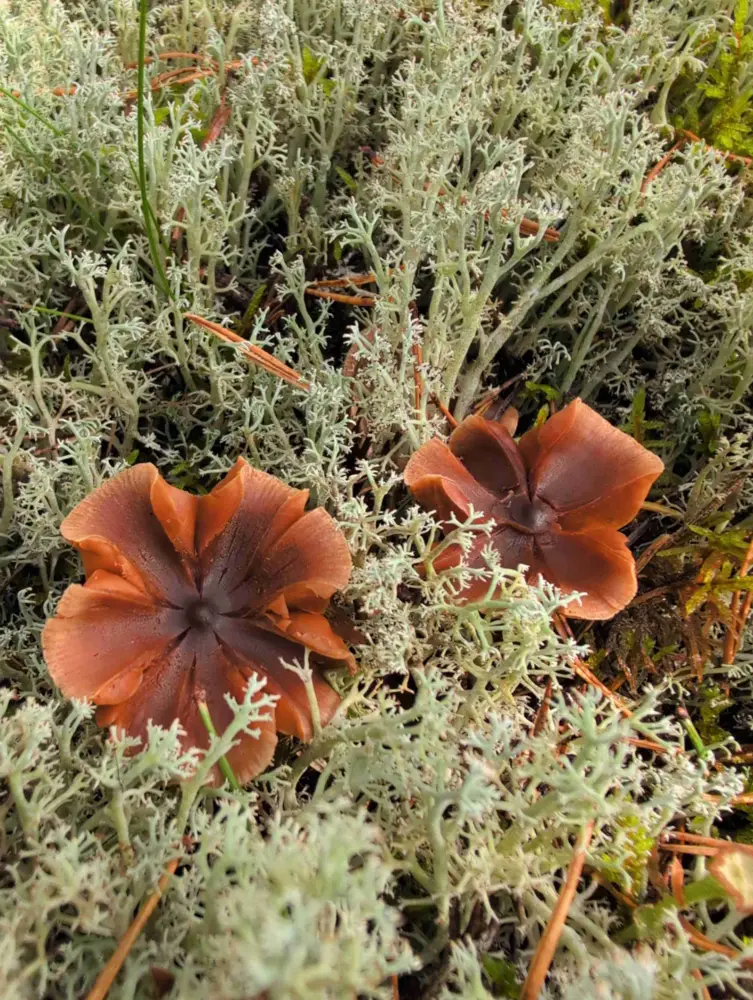
Naissaar's nature is not just big trees and sea views. A very important part of the island's biodiversity lies on the ground.
Mosses, lichens, small plants and fungi grow on the forest floor, and they can be very slow to recover.
Particularly sensitive are:
- the vegetation of sand dunes;
- lichen-covered ground;
- the undergrowth of old forests;
- the growing sites of protected plants and fungi.
The Naissaar protection rules allow visitors to pick berries, mushrooms and other forest by-products throughout the protected area. This does not, however, give the right to damage protected species or their habitats.
Under the Nature Conservation Act, damaging and destroying protected species is prohibited.
So:
- Protected plants and fungi must not be picked.
- Do not trample or damage lichens and mosses.
- Do not collect plants or natural materials just as souvenirs.
The best souvenir from Naissaar is a beautiful memory and a photo.
Respect birds and wildlife
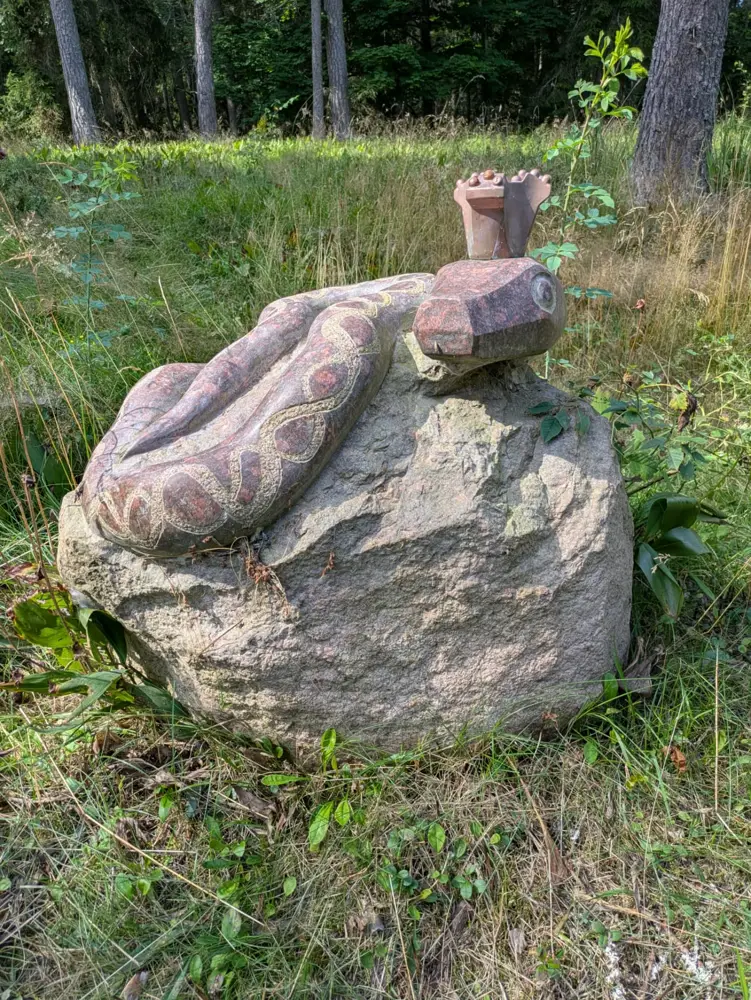
Naissaar is home to many birds and animals. Several protected species can be seen in the island's forests and coastal areas.
When out in nature, remember that animals need peace, and avoiding disturbance is especially important during the nesting season.
Good practice is to:
- Keep a sufficient distance from birds and animals.
- Not go near nests or young animals.
- Not feed wild animals.
- Not play loud music or make unnecessary noise.
- Not leave food or waste where animals can reach it.
- Keep your dog on a lead.
If you meet a wild animal or bird, do not try to approach or touch it. Let the animal go its way in peace.
Naissaar is home
Naissaar is not only a tourist destination. There are villages, homes, summer houses and a local community for whom the island is their everyday living environment.
As a visitor, please respect the privacy and peace of local people.
Please:
- Do not enter private property or home yards without the owner's permission.
- Do not use private roads or yards as stopping places without permission.
- Be considerate of local residents and their daily activities.
- Avoid excessive noise and disruptive behaviour.
- Do not leave your bike where it blocks local traffic.
In summer, Naissaar is a lively and busy island. Local residents, summer residents, hikers, boat owners and day visitors all move around here.
A good guest knows how to enjoy the island's buzz while being considerate of others.
Historical sites and military heritage – visit with care
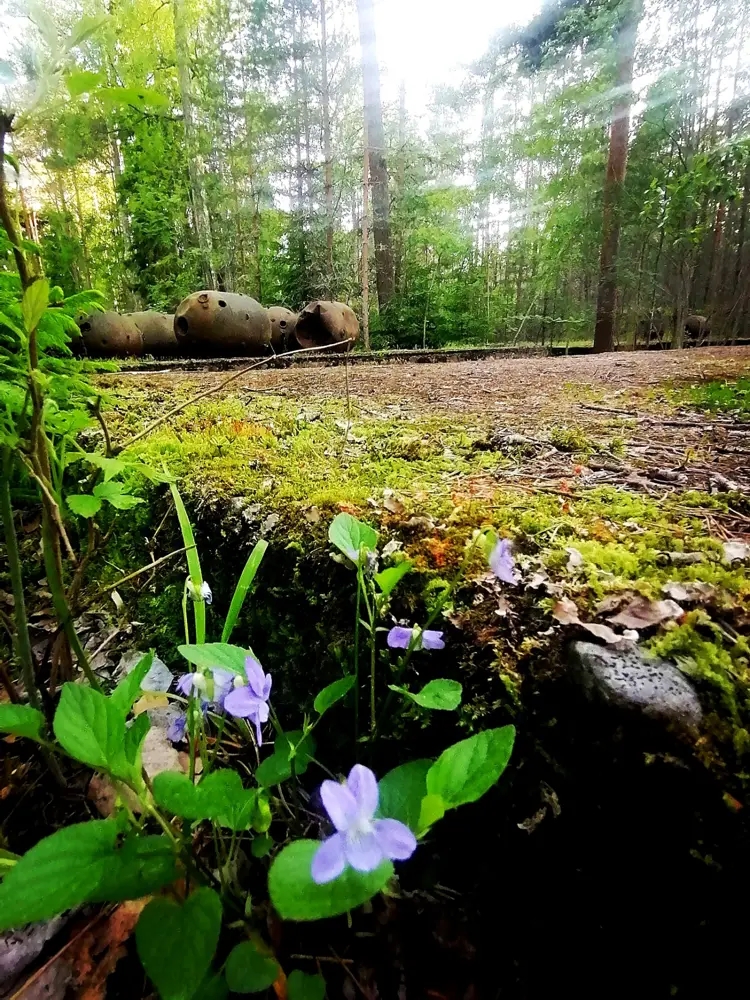
Naissaar's history is exceptionally fascinating. The island has structures of Peter the Great's Naval Fortress, coastal defence batteries, ammunition depots, traces of a narrow-gauge railway and other historical sites.
These places are part of Naissaar's cultural heritage and give the island its special historical significance.
Many of the structures are partly ruined or hard to reach.
When visiting historical sites:
- Do not climb on walls or structures that may collapse.
- Do not enter closed or marked dangerous structures.
- Do not touch or move unknown objects.
- Do not break, remove or take away historical details.
- Follow signs and any access restrictions.
Old military sites may involve a risk of collapse, open shafts, deep holes and other hidden dangers. Families with children should be especially careful.
If you would like to learn more about Naissaar's history, we recommend joining a guided tour. That way you will learn more about the background and stories of the sites and move around more safely.
Public events and group visits
Naissaar is well suited for visits by larger groups, school classes and companies.
The nature park protection rules do, however, set conditions for organising public events.
For example:
- An event with more than 50 participants in a strict protection zone requires the consent of the Environmental Board.
- Organising a public event with more than 50 participants at an unprepared site in a limited management zone requires the consent of the Environmental Board.
As different protection conditions apply in different parts of Naissaar, we recommend checking the conditions for larger groups, public events and special programmes with the Environmental Board in advance.
If you are planning a school trip, a company team day or a guided tour, get in touch with Visit Naissaar. We will help you find a suitable programme and arrange your visit in line with the island's possibilities and nature protection conditions.
Electricity and internet on Naissaar – the island's own solutions
Naissaar is also special in terms of its electricity supply. Local power generation solutions are used on the island, and getting electricity does not work the same way everywhere as on the mainland.
Electricity is produced using, among other things, solar panels, battery storage and generators.
A good example is Naissaar harbour, where solar panels are among the first things visitors notice on arrival. They are a visible part of the island's local power generation and show one of the particularities of everyday life on Naissaar.
Solar panels make it possible to use locally produced renewable energy. In less sunny periods, other ways of generating or storing energy are also needed.
Internet and WiFi
Mobile coverage and internet connection may be patchy in different parts of Naissaar. Especially in the more forested and remote parts of the island, the connection may not always work well.
WiFi is available for visitors in the Naissaar harbour area. While at the harbour, you can use the internet if needed, send messages and share your island experiences.
Before setting off on a longer hike or bike ride, it is worth downloading maps and other necessary information to your phone.
What to keep in mind when coming to the island?
- Charge your phone and other necessary devices before the trip.
- Bring a power bank if possible.
- Use electricity sparingly.
- Keep in mind that mobile coverage and internet connection may vary across the island.
Naissaar invites you to a slightly different kind of holiday – here you don't have to be on your phone or online all the time. Sometimes it is rather nice to put the screen aside and enjoy island life.
Safety on the island
Naissaar is a natural environment, and not all the conveniences that have become usual on the mainland are available here.
Before setting off on a longer hike or bike ride:
- Study your route and allow for the length of the way back.
- Take enough drinking water and any necessary medication.
- Charge your phone battery and bring a power bank if possible.
- Keep in mind that there may not be mobile coverage everywhere on the island.
- Let a companion know where you plan to go.
- Take the weather and sea conditions into account.
- When travelling with children, keep a particularly close eye on them, especially on the beach and near old military sites.
In an emergency, call 112.
At swimming beaches, note that the sea gets deep fairly quickly. This is especially important for families with small children.
Naissaar welcomes good guests!
Naissaar is a place to walk in pine forests, cycle, learn about a fascinating history and slow down.
Our wish is that everyone who comes to the island takes home wonderful experiences, and that Naissaar's nature, history and local life are preserved for future generations.
If you would like to get to know the island better, join us on a guided nature hike or a tour of Naissaar's historical sites.
At Naissaar harbour, Harbour Café Nargen also welcomes visitors – a place to refuel after your hike, enjoy the view and watch harbour life on the island.
See you on Naissaar!
Updated:
Ready for a Naissaar experience?
Book your guided tour, hike or excursion and discover the best spots on Naissaar!
Book a tour